Wedding second shooter contract: what to put in it, and what to ask a lawyer
This is not legal advice. We're not lawyers, and nothing here replaces one. Rules on contractors, image rights and restrictive clauses differ by state and by country. What follows is a checklist of what to talk through with a lawyer who knows your state, so the agreement you sign does what you think it does.
Search "second shooter contract" and almost everything that comes back is a template: free ones, paid ones, PDFs, editable files. A template is a reasonable start. The trouble is that a template answers questions you haven't asked yet, in someone else's state, for someone else's business. This guide is the list of questions.
Why a written agreement, even with someone you trust
Most second shooter arrangements start in a message thread. That works until one of a handful of things comes up: the second posts the couple's photos before you've delivered them, gets sick the morning of, sends the files three weeks late, or hands a guest their own business card. None of those is a crisis, but each one is easier with something written down that both of you agreed to before the wedding.
A written agreement also protects the second shooter. They know when they get paid, what happens if a wedding is cancelled, and what they may show in their own portfolio.
Standing terms once, booking details each time
The cleanest setup has two layers:
- A standing agreement, signed once, that covers everything that holds for every wedding: the relationship, image use, gear, conduct, pay terms, cancellation.
- A booking for each wedding that adds only that day's details: the date, the couple, the role, the start time, the hours and the rate for that day.
That way you don't renegotiate image rights every Saturday, and a yes to a booking is a yes to a known set of terms. We wrote more about asking for the date and what "confirmed" should mean in how to hire and confirm a wedding second shooter.
The wedding second shooter contract checklist
Take this list to your lawyer. For each item, the question is not "is it in the template?" but "does our wording do what we want, where we work?"
1. Who you are to each other
Is the second shooter an independent contractor or an employee? This is the first question, because most of the rest depends on it, and the label you write in the agreement doesn't decide it on its own.
The IRS looks at the whole relationship, grouped as behavioral control, financial control and the type of relationship (IRS, Independent contractor or employee?). The US Department of Labor has its own test for wage law (DOL, Misclassification of employees as independent contractors), and many states have their own rules too. Ask your lawyer and your accountant together.
2. The role and the scope
What the second shoots, and what they don't. Second photo, second video, assistant duties such as gear and the family list. Whether they shoot in your style or their own. Whether editing is included, and if so, how.
3. How a booking is offered and accepted
How you'll offer a date, how they accept, and what counts as confirmed. A deadline to answer. Whether a hold before the couple books is a booking or only a favor, and how either of you ends it. The day-to-day side of this, from the request to the hold, is in how to hire and confirm a wedding second shooter.
4. Pay and expenses
How pay is worked out (per wedding, per hour, or another method you choose), when it's paid, and how they invoice you. Which expenses you cover, such as travel, parking, tolls or a meal, and how they're claimed. What happens with overtime when the day runs long. This guide gives no rates.
5. Gear and backups
What they bring, whether you expect cameras that record to two cards, and backup bodies, lenses and batteries. Who pays if their gear fails, and what happens to the files if a card is lost.
6. Files and delivery
The format, how they hand files over, and by when. How long they keep copies, and whether they delete them after you confirm you have everything. Following up when files or an invoice are late is covered in second shooter files and invoices.
7. Image ownership and use
Who owns the copyright in the second shooter's images, and what each of you may do with them. This is the clause most worth a lawyer's time. Calling the work "made for hire" doesn't settle ownership on its own. The US Copyright Office explains that work commissioned from someone who isn't an employee is made for hire only if it falls into one of nine categories the law lists, such as part of an audiovisual work or a contribution to a collective work, and both sides sign a written agreement that expressly says so; otherwise it is not (US Copyright Office, Circular 30: Works Made for Hire). Ask whether you need an assignment, a license, or something else.
Then the practical parts: may they use images in their portfolio, from when, with or without the couple's permission, with credit to your studio, and never before you've delivered to the couple.
8. Representing your studio
How they introduce themselves at your weddings, what they wear, and whether they may hand out their own cards. Whether they may contact your clients, planners or venues afterward. Restrictions like non-solicitation and non-compete clauses are treated very differently from state to state, so ask your lawyer what's enforceable where you are before you rely on one.
9. Conduct on the day
Alcohol, phones, posting to social media during the wedding, and respecting the family's and the venue's rules.
10. Cancellation, illness and substitutes
What happens if they cancel, if you cancel, or if the couple cancels or postpones. What they do if they're ill on the day: who finds a replacement, and whether you approve the replacement first.
The clause says who is responsible. It doesn't staff the wedding. Whoever takes the seat still needs a clear yes to the date, the role and the terms, written down before the day, the same as any confirmed booking. For the practical side when it happens, see second shooter canceled last minute.
11. Insurance and liability
What insurance you expect them to carry (liability, equipment), whether you need proof, and who is responsible if someone is hurt or something is damaged. Indemnity clauses belong in the lawyer conversation, not in a template you didn't read closely.
12. Confidentiality
The couple's details, family situations, private moments that shouldn't be shared, and the venue's security rules.
13. Disputes, changes and signatures
Which state's law applies, how disagreements are handled, how the agreement is changed (in writing, signed by both), and how long it lasts.
Questions to bring to your lawyer
If you only have half an hour, start here:
- Is my second shooter a contractor or an employee where I work, given how I actually run my weddings?
- Who owns the images under our current wording, and is that what we both intend?
- Can I limit their contact with my clients, and for how long?
- What insurance should I ask for, and should I collect proof?
- What happens to our agreement if a wedding is cancelled or postponed?
- Does the template I bought fit my state, or what has to change?
And ask your accountant which tax forms you need from your contractors and when. This guide doesn't answer that.
Keep the signed copy findable
An agreement only helps if you can find it, and know it's the current one.
- Know who has signed which version. When you update the agreement, ask everyone to sign the new one, and keep the date.
- Keep insurance certificates with their expiry dates, and ask for the new one before the old one runs out.
- Keep the paperwork for each person in one place, not spread across email threads.
Full disclosure: we make software for this
Crew Confirm runs the crew side of a wedding studio: booking, briefing and paying the wedding crew. It isn't a contract tool. It doesn't draft, review or e-sign agreements, and it doesn't give legal advice. What it does is keep track of the paperwork around the contract and the bookings that follow it.
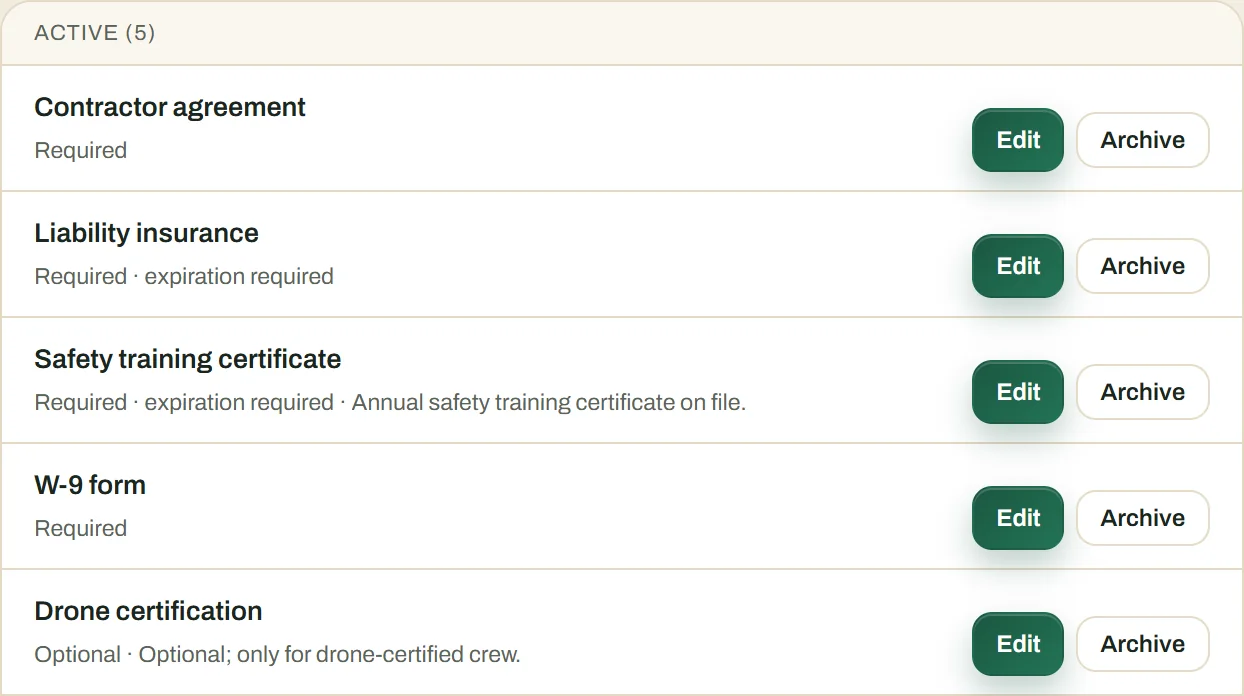
A list of the documents you ask every crew member for. You set your own requirements, such as a signed contractor agreement, liability insurance with an expiration date, or a W-9, and mark each one required or optional.
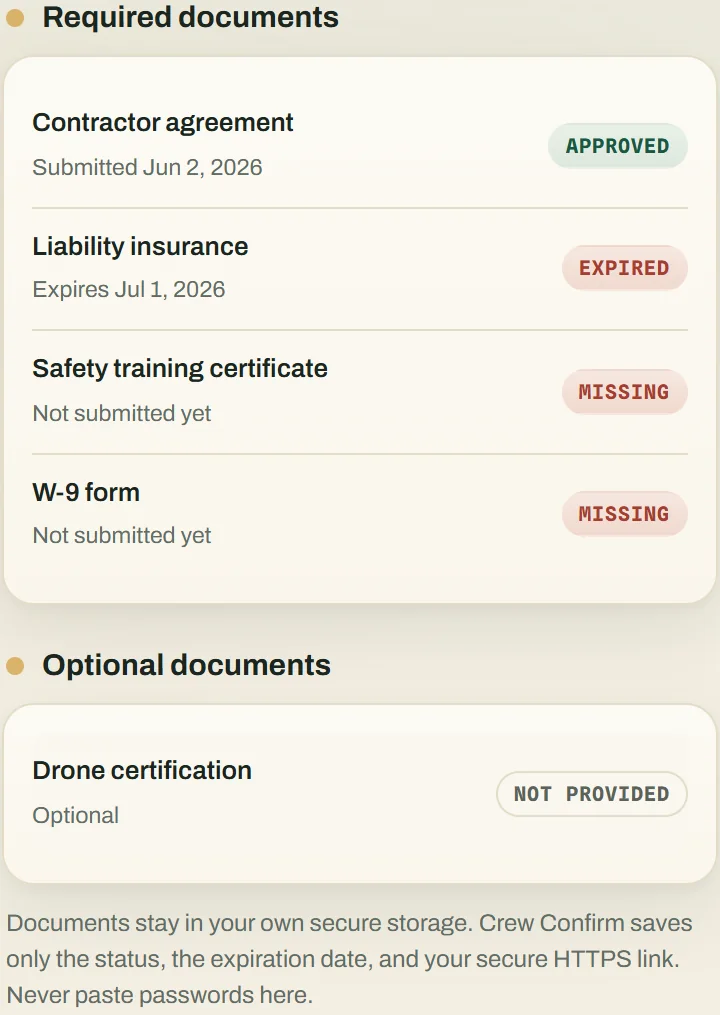
Each crew member sees where they stand. On their phone, they submit a secure link to each document from their own storage, and you review it. Each requirement shows its status: approved, expired or missing. The documents stay in the crew member's own storage; the app keeps the status, the expiry date and the link.
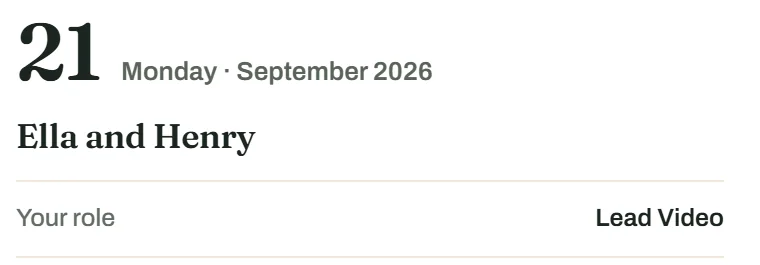
Each booking carries its own details. With the standing terms in place, you send a booking request for one wedding: the date, the couple and their role, with a deadline to answer. They accept in one tap, and there's a record of who accepted and when.
It isn't a marketplace and it doesn't move money. Crew never pay. See how it works or the FAQ. If someone on your crew leads weddings you're not at, read associate photographer or wedding second shooter?