Associate photographer or wedding second shooter? What each one needs from you
Sooner or later, a busy studio sends someone to a wedding the owner won't be at. Sometimes that person is a second shooter, working beside a lead. Sometimes they are the lead. The two titles get used loosely, but on the day the difference is simple, and it decides what you owe them before they leave home.
The short version
A second shooter supports a lead photographer who is there. An associate photographer is the lead, at a wedding you are not at, working under your studio's name.
The second shooter needs a role, a start time and a clear brief. The associate needs everything you know about the wedding, the authority to make calls, and a way to reach you.
What people mean by associate photographer and second shooter
Working photographers mostly agree on the second shooter. They cover what the lead can't be in two places for: the other side getting ready, a second angle during the ceremony, the guests' reactions, the parts of the reception happening behind the lead. And they shoot in support of the lead's style, not their own (ourvows.app's guide to the wedding second shooter, February 2025).
"Associate" varies more. Aftershoot's guide (September 2026) describes an associate as the lead for the whole wedding, shooting under the owner's brand, often with the owner's studio doing the editing. A photographer's blog at Beaux & Arrows (February 2025) uses the word for someone who works under a studio's name and books their own sessions on commission. Each is a real arrangement. So when you hire an associate, say which one you mean, in writing.
What a wedding second shooter needs from you
- Their role and their own start time. The second rarely starts when the lead does. Give them a time and the place they start.
- Who the lead is. By name, and what that means: the lead makes the calls on the day.
- Where to be. The address, the crew entrance, parking and load-in.
- What to shoot, and what not to. The other side getting ready, the second angle, the guests. Say who owns the family groupings, so two people aren't shooting the same thing while nobody shoots the other.
- The small things. Dress, gear, camera clocks set to the same time, and how to hand over files.
A good second shooter can do all of this from a one-page brief with their role, their start time, where to go and who leads. They don't need the couple's phone numbers or your contract. They need the plan, and to know who is in charge.
When two people cover one wedding, each needs their own track through the day, not a copy of the lead's. We wrote about giving each person their own track and start time.
What an associate photographer needs from you
An associate needs everything the second needs, and then the rest of what you usually carry in your head:
- The whole plan, not just their part: the timeline, every crew member's role and start time, and which times are fixed.
- The contacts. The couple, the planner and the venue coordinator, each with a number, and permission to call them.
- The family list, with its notes. The groupings, and the notes that are for reading, not photographing: divorced parents, a grandparent who needs a seat, a relative who prefers not to be photographed.
- The couple's priorities, in the couple's own words.
- The authority to decide. Say what they can decide alone, such as reordering portraits when the day runs late, or moving the second shooter to cover a gap. Then say what needs you, such as anything that changes the coverage the couple paid for.
- How they represent you. How they introduce themselves, what they say when a guest asks for a card, and who edits the images afterwards.
And tell the second shooter, before the day, that the associate is the lead.
The wedding you're not at
This is the part most studios leave to luck. Decide it before the day:
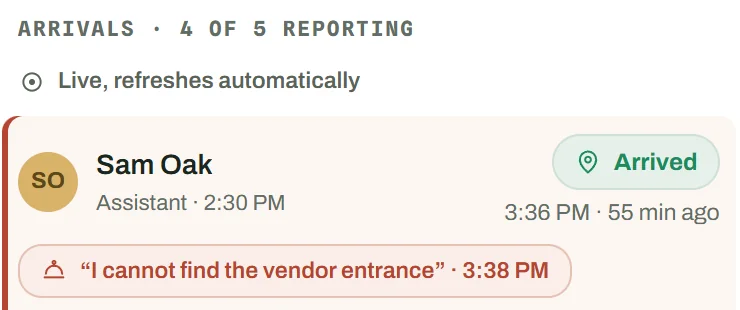
- How you'll know they arrived. A short message from each person when they get there costs nothing, as long as everyone knows to send it.
- What counts as needing you. A hidden vendor entrance is the associate's to solve. A ceremony moved by an hour may not be.
- How they reach you. For anything urgent, a phone call, every time.
- What you want afterwards. A short note that night: anything the couple asked for, anything that went wrong, anything you should follow up.
The first time, it feels like letting go. A clear plan is what turns it into trust.
If this is most Saturdays rather than one, we wrote about running more than one wedding crew on the same day, and about managing a wedding photography team from inquiry to wrap-up.
Associate photographer contracts and pay: questions for a lawyer
This is not legal advice. An associate agreement deserves a lawyer's review, because it covers more than a second shooter's: the associate speaks for your studio. Questions worth taking to one:
- Is this person a contractor or an employee where you work? The rules differ from state to state.
- Who owns the images, and how may the associate use them, and from when?
- May the associate later work directly for your couples or the people they refer?
- What happens if they cancel, or if you do?
- What insurance does each of you need?
- How do they keep the couple's details private?
What to pay an associate is its own question, and it varies a lot by market. Whatever you choose, write it down before the day.
Many of the same questions apply to a second shooter's agreement. We keep a checklist of the clauses to take to your lawyer, from how a booking is accepted to cancellation and image use.
Full disclosure: we make software for this
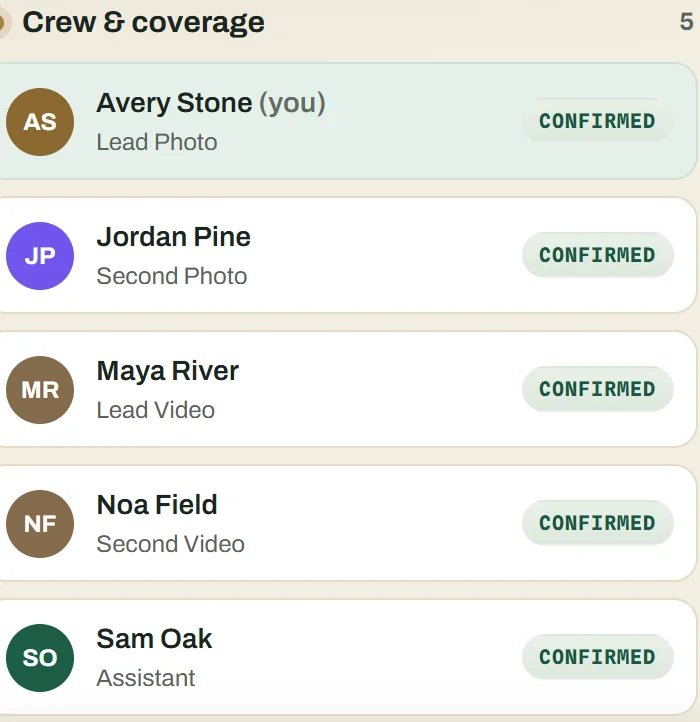
Crew Confirm was built inside a working NJ/NY wedding studio, and it runs that studio's weddings now. It has no role called "associate". An associate is booked into the lead seat, Lead Photo or Lead Video, like anyone who leads a day. You staff each wedding one seat at a time, one seat per role, and the booking request names the role.


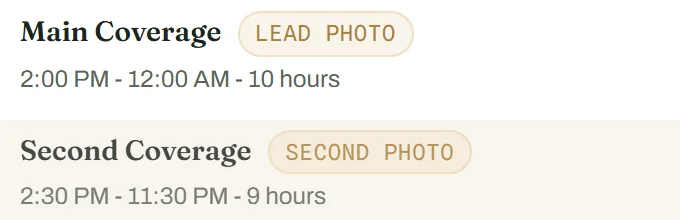
Each crew member's wedding page carries their role and their own start time, and the schedule is split into coverage blocks, so the second shooter's block can start and end at different times from the lead's. On the wedding day, a second shooter's home screen names the lead photographer. Everyone sees who else is on the wedding crew, and in what role, and the shot list, which the whole team checks off as they go.

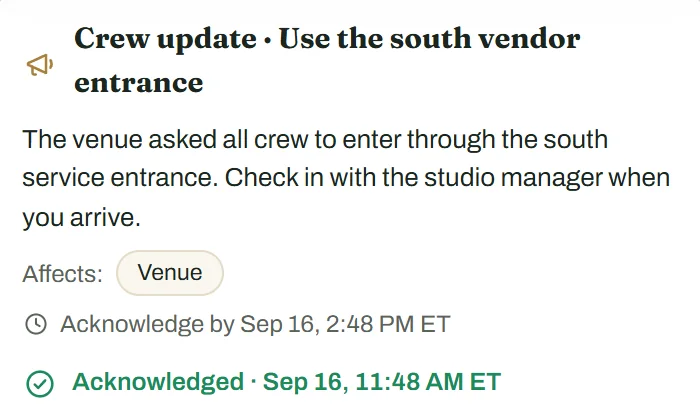
On a wedding you're not at, crew tap Arrived, Running late or Help, and it shows up on one board at the studio. When the plan changes, a crew update can carry a deadline to acknowledge it, and you see by name who has acknowledged it and who hasn't. The whole flow is on how it works.
It has limits worth knowing. A help alert doesn't text or call anyone, so your associate still needs your number. It isn't client software: it keeps the couple's names, not their phone numbers or contracts, so the contact sheet still comes from you. And crew don't see each other's phone numbers in it, so give your associate the second shooter's number yourself, with the second's permission.
There is no app store. Crew open a link in their phone's browser and can add it to their home screen. Crew never pay; the plans for studios are in the pricing section.
If you're hiring a second shooter rather than an associate, we wrote about that too: how to hire and confirm a wedding second shooter, including how to ask for the date and what "confirmed" should mean.
If you're about to send someone to lead a wedding you won't be at, start your studio ($9 for your first 14 days, then your plan renews monthly unless you cancel) and staff that wedding in it, or book fifteen minutes and we'll walk through it with you.